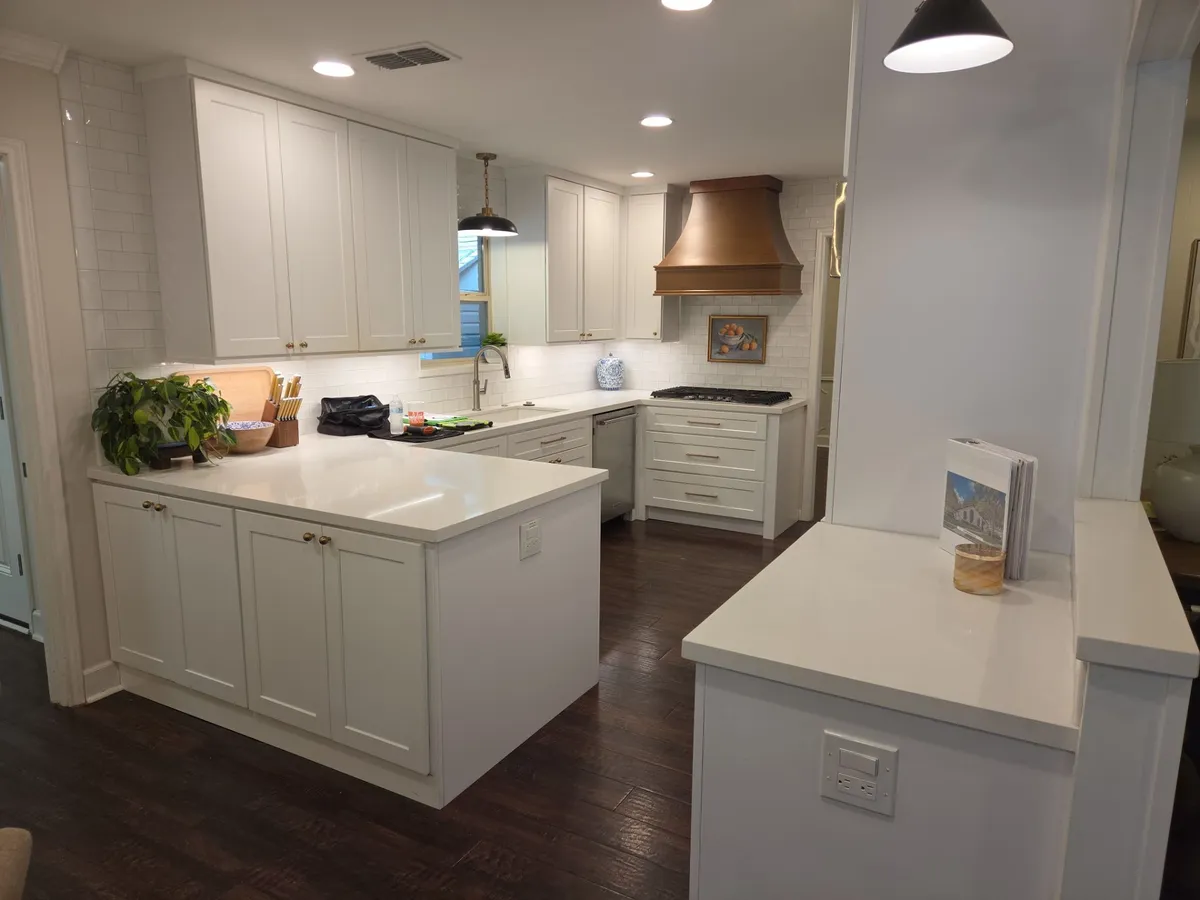
Whole Home Color Palette Flow in The Woodlands TX Homes
A whole-home interior color flow starts with one anchor neutral used in every room your eye can see from one space into the next, then builds out with no more than 5-7 total colors across the house, distributed using a 60-30-10 ratio (dominant, secondary, accent). The trick isn't picking pretty colors one room at a time — it's matching undertones between connected interior spaces and deciding in advance where one wall color stops and the next one starts.
I've walked through this with homeowners in two-story floor plans all over The Woodlands, TX, and the pattern is almost always the same: someone picked an interior wall color they loved for the dining room, a different one they loved for the living room, and by the time both are on the wall, the house feels like six separate decisions instead of one home. Here's how to avoid that.
Start With One Anchor Neutral, Not Six Separate Room Decisions
Every interior palette that reads as cohesive begins with a single base neutral, chosen before anything else. This is the wall color that shows up most — hallways, the main living area, the foyer, and usually the primary bedroom. Pick this first, and every other interior color in the house gets measured against it.
In the open floor plans common to newer construction around Sterling Ridge and Creekside Park, this anchor color often ends up covering 60-70% of visible interior wall space just because of how much is open to view from the kitchen island or the stairs. In older, more compartmentalized homes near Grogan's Mill or Cochran's Crossing, you have more rooms with doors that close, which gives you more freedom to break from the anchor in individual rooms.
Build the Interior Palette With the 60-30-10 Rule
Once you have your anchor neutral, the rest of the home's interior gets organized around a simple ratio: 60% main neutral (living areas, hallways, primary bedroom), 30% secondary neutral (dining room, guest bedrooms, a slightly deeper or lighter shade of the same family), and 10% accent (a powder room, a built-in, one feature wall). Most professionally coordinated interiors land on somewhere between five and seven total colors for the entire house — fewer than that and the home can feel flat, more than seven and it starts to feel restless and disconnected, room to room.
This is also where interior trim and ceiling color matter more than people expect. Using the same white on trim and ceilings throughout the house, rather than switching whites room to room, does more to unify a whole-home interior palette than almost any wall color decision.
Use a Flow-Through Color for Open Interior Sightlines
If you can stand in one room and see into the next without a door in between, those two interior spaces should generally share a wall color — or at minimum, the same undertone family. This is the single most repeated rule in whole-home color planning, and it's especially relevant in The Woodlands, TX, where open-concept kitchen-living-dining layouts are the norm in newer builds throughout Alden Bridge and much of the newer construction in Sterling Ridge.
The exception is any room behind a closed door — a bedroom, a home office, a powder room. Those don't need to coordinate with the main flow-through color at all, which is exactly where a homeowner can go bolder without disrupting the rest of the house. If you're weighing a saturated jewel tone or a moodier palette for one of those closed-door rooms, our interior color trends guide breaks down which of this year's bolder interior colors hold up best in Gulf Coast light.
Match Undertones Room to Room (the Most Common Mistake)
The single most common whole-home interior color mistake isn't a clashing color — it's a clashing undertone. Two neutrals can look nearly identical on a swatch and still fight each other on adjacent interior walls because one carries a warm undertone and the other carries a cool or purple-gray undertone. Any room visible from another room needs to share an undertone family, warm or cool, not just a similar lightness value.
This matters more here than people expect because of how much natural light pours through windows into Woodlands homes. UV index regularly hits 10 or higher from May through September, and that intense Gulf Coast sun shifts how an interior color reads throughout the day — a greige that looks neutral at 9am can read distinctly purple or green by late afternoon in a west-facing great room. Testing large swatches directly on the interior wall, at different times of day, is the only reliable way to catch an undertone problem before it's on every wall in the house.
Pick Your Interior Transition Points Before You Pick Up a Brush
Interior colors should change at architectural break points, not in the middle of an open sightline. Doorways, archways, half-walls, and ceiling beams are the natural places to shift from one palette color to the next inside the home. Decide these transition points on paper before any paint goes on the wall — it's far easier to adjust a plan than to repaint an interior wall that was never supposed to be a different color in the first place.
This planning step matters even more on a whole-home interior repaint than a single room, simply because the project runs longer and touches more surfaces inside the house. Indoor humidity here tracks the outdoor average of 75-80% or higher for much of the year, which affects paint cure time on interior walls and can require extra surface prep — patching and sanding — before a fresh coat goes on walls that have absorbed ambient moisture. During hurricane season, that ambient indoor humidity climbs further, which can stretch dry times between coats on interior surfaces. None of this rules out interior painting at any particular time of year — it's available year-round — but it's part of why a dedicated, background-checked crew sequencing rooms in the right order matters on a multi-room interior project.
What This Costs in The Woodlands, TX
For a whole-home interior repaint using premium Sherwin-Williams products with proper humidity-related prep, Fresh Coat Painters of The Woodlands typically prices in the $2.50-$4.50 per square foot range, with trim work priced separately. A larger custom home in Carlton Woods with taller ceilings, extensive trim, and multiple accent walls will land toward the higher end of that range; a standard two-story production home in Alden Bridge or Sterling Ridge with a straightforward 5-6 color interior plan typically lands closer to the middle. We see this range hold fairly consistently whether the home is in the 77380 and 77381 zips closer to the village center or further out toward 77382, 77384, 77385, and 77389.
Every interior project we quote in The Woodlands, TX comes backed by a 3-year warranty, and because of our Sherwin-Williams Platinum Certification, the work carries a lifetime warranty from Sherwin-Williams beyond that. As a PCA member and a fully licensed and insured company, we build every whole-home interior color plan the same way: anchor color first, undertones checked against actual interior wall light, then everything else layered on around it.
Frequently Asked Questions
How many paint colors should a whole house have?
Most cohesive whole-home interior palettes land between five and seven total colors, including trim and ceiling white. Fewer than five can feel flat across a large home, and more than seven tends to feel disjointed room to room, especially in open floor plans common throughout The Woodlands, TX.
Do bedrooms need to match the rest of the house?
No. Interior rooms behind a closed door — bedrooms, home offices, powder rooms — don't need to coordinate with your main flow-through color at all. These are the rooms where a bolder or more saturated color choice won't disrupt the overall color flow of the house.
What is the 60-30-10 rule in paint colors?
It's a distribution method where 60% of the home's interior uses a dominant neutral in main living areas and hallways, 30% uses a secondary neutral in rooms like a dining room or guest bedroom, and 10% is reserved for an accent color in a powder room, built-in, or single feature wall.
How do I know if two colors have clashing undertones?
Paint large sample swatches directly on each interior wall and compare them at different times of day, since natural light shifts how undertones read. A color that looks neutral in the morning can reveal a warm or cool cast by late afternoon, which is especially noticeable given how much direct sun comes through west-facing windows in this area during summer months.
Where should paint colors change from room to room?
Color should transition at an architectural break point — a doorway, archway, half-wall, or ceiling beam — rather than mid-wall within an open interior sightline. Planning these transition points before painting prevents having to repaint a wall that should have stayed one consistent color.
What does whole-home interior painting cost in The Woodlands, TX?
Fresh Coat Painters of The Woodlands typically prices whole-home interior repaints between $2.50 and $4.50 per square foot, depending on ceiling height, trim detail, number of accent walls, and prep needed. Larger custom homes, like many in Carlton Woods, tend toward the higher end of that range.
Does humidity in Houston affect interior paint color or finish?
Humidity doesn't change a paint's color, but it does affect indoor dry time and can require additional surface prep before repainting, since prolonged moisture exposure affects how well new paint bonds to existing interior walls. With average humidity in the 75-80% range for much of the year, proper prep time matters on any multi-room interior project.
Should trim be the same white throughout the whole house?
Yes, using one consistent trim and ceiling white throughout the home's interior is one of the simplest ways to unify a whole-home color palette. Switching whites room to room, even subtly, tends to undercut the flow created by a well-planned interior wall color scheme.
Can I use a bold or trending color in an open floor plan?
Bold, saturated interior colors work best in rooms that are closed off from the main sightlines of an open floor plan, rather than on walls visible from the kitchen or living area. If a homeowner wants a bolder 2025 color trend in a shared interior space, it's usually safer applied as a single accent wall within the established 10% allocation.
If you're planning a whole-home interior repaint in The Woodlands, TX and want a color plan built around your home's actual layout and light, Fresh Coat Painters of The Woodlands puts together a full interior palette plan as part of every estimate. You can reach out through our The Woodlands location page to get a walkthrough scheduled.
— Joe Martinta, Owner, Fresh Coat Painters of The Woodlands